
Why Sitting All Day Is a Problem
Many people spend hours sitting at desks or in front of screens. This habit can lead to poor posture and health problems. In fact, Pilates movements for better posture are a great way to fight these issues. According to the World Health Organization, sitting too much increases the risk of back pain and other health concerns. Even if you exercise, long periods of sitting can still harm your body. For this reason, it is important to move often and use good posture habits.
Common Symptoms and Health Risks of Prolonged Sitting
When you sit for long hours, your body can show warning signs. For example, you may notice:
Over time, these symptoms can lead to bigger health risks. For instance, the CDC warns that sitting too much can raise your risk of heart disease, diabetes, and obesity. Additionally, poor posture can cause lasting pain and muscle weakness.
How Sitting Affects Posture and Musculoskeletal Health
When you sit, your muscles and joints can become weak or tight. As a result, your spine may curve forward, and your shoulders may round. Over time, this can lead to poor alignment and muscle strain. For example, your core muscles may weaken, making it harder to sit up straight. In addition, your hips and hamstrings can become tight, which affects how you move and stand. Because of these changes, it is important to stretch and strengthen your body often.
The Benefits of Pilates for Posture Improvement
Pilates is a gentle form of exercise that focuses on core strength, balance, and flexibility. Many experts recommend Pilates exercises for office workers and people with desk jobs. Not only does Pilates help improve posture from sitting, but it also supports healthy movement. For example, Pilates teaches you to use your core muscles to support your spine. In addition, it helps stretch tight areas and strengthen weak ones. As a result, you may notice less pain, better balance, and more energy throughout your day.
Pilates Movements for People Who Sit All Day
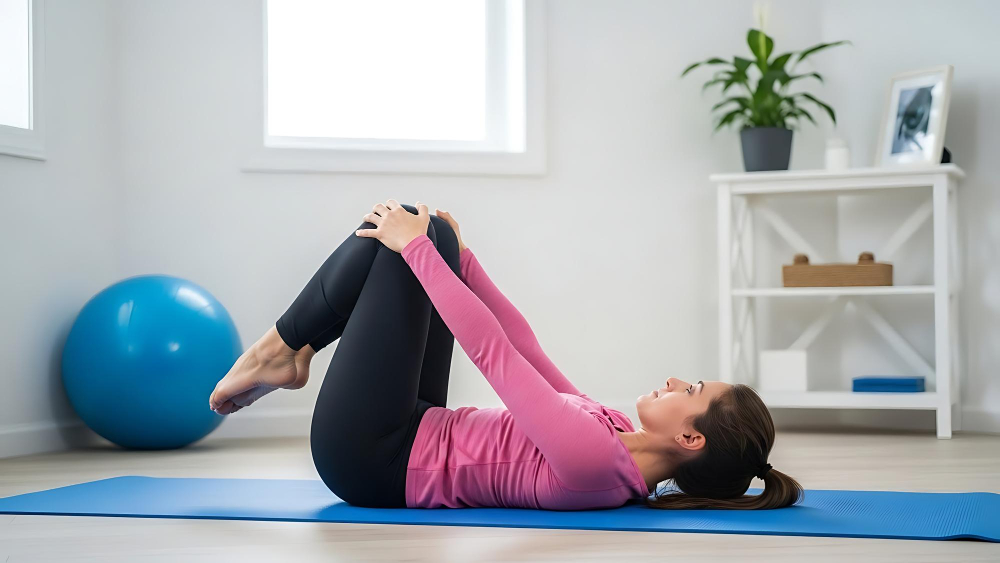
Try these simple Pilates movements for better posture. You do not need special equipment. However, a mat can make you more comfortable. Always move slowly and listen to your body. If you are new to exercise or have health concerns, talk to your doctor first.
1. Chest Opener
2. Seated Spine Twist
3. Pelvic Tilt
4. Shoulder Bridge
5. Cat-Cow Stretch
Tips for Adding Pilates to Your Daily Routine
Even short sessions can help improve posture from sitting. To make Pilates a habit, try these tips:
Lifestyle Guidance for Good Posture at Work and Home
Besides Pilates, small changes can support better posture. For example, adjust your chair and desk so your feet rest flat and your screen is at eye level. In addition, take breaks to stand or walk every 30–60 minutes. At home, choose chairs with good back support and avoid slouching on the couch. Because habits matter, check your posture often and make changes as needed.
Prevention Strategies for Posture-Related Issues
To prevent posture problems from a desk job, use these strategies:
With these steps, you can reduce pain and support your health, even if you sit all day.