
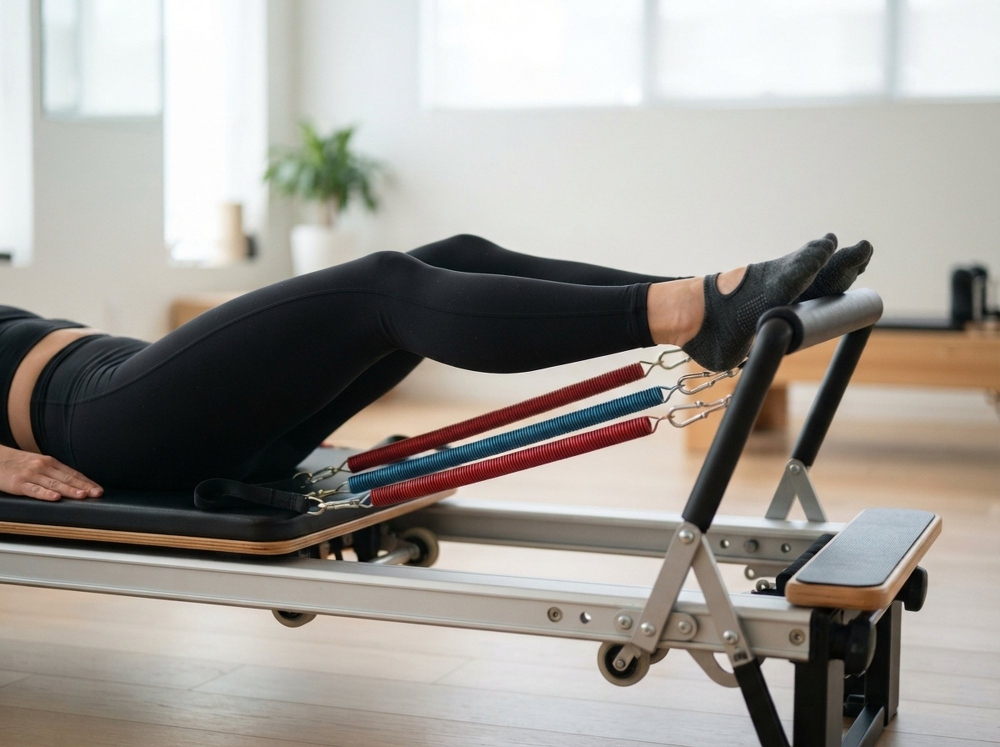
What Is Reformer Footwork?
Reformer footwork is a set of exercises done on a Pilates reformer machine. This equipment uses springs and a moving platform to help you exercise. Many people use reformer footwork for lower-body control and strength. In these exercises, you push against a foot bar while lying on your back. Because the reformer adds resistance, your muscles work harder. As a result, you can build strength and control in your legs and hips. Reformer footwork is popular in Pilates classes and physiotherapy exercises for legs.
Key Benefits for Lower-Body Control
Reformer footwork offers many benefits for your lower body. First, it helps improve muscle strength. In addition, it can boost balance and stability. Because you use both legs, your body learns to move evenly. This can help prevent injuries. Some key benefits include:
Moreover, reformer footwork can help with recovery after injury. Many physiotherapists use these exercises for safe, guided movement.
How Reformer Footwork Works: Muscles and Movements Involved
During reformer footwork, several muscle groups work together. For example, your thigh muscles (quadriceps) help straighten your knees. At the same time, your hamstrings and glutes support your hips. Because you push and control the movement, your calf muscles also get stronger. The main movements include bending and straightening your knees and ankles. With each push, you train your muscles to work smoothly. As a result, you gain better control over your lower body. Even small muscles in your feet and ankles get stronger with regular practice.
Common Techniques and Variations
There are many ways to do reformer footwork. For instance, you can change your foot position on the bar. This helps target different muscles. Some common techniques include:
Additionally, instructors may adjust the spring resistance. This makes the exercise easier or harder, depending on your needs. Because there are many variations, reformer footwork can be tailored for beginners or advanced users.
Safety Tips and Precautions
While reformer footwork is generally safe, it is important to follow some tips. First, always use proper form. If you are new, work with a trained instructor. They can help you avoid injury. In addition, start with light resistance and increase slowly. Some other safety tips include:
Moreover, if you have a health condition or injury, ask your doctor before starting. This helps ensure that reformer footwork is safe for you.
Who Can Benefit from Reformer Footwork?
Many people can benefit from reformer footwork for lower-body control. For example, athletes may use it to build strength and prevent injuries. Older adults often use it to improve balance and reduce fall risk. People recovering from surgery or injury may find it helpful for gentle movement. In addition, those with joint pain or arthritis can use reformer footwork for safe exercise. Because the reformer supports your body, it is gentle on your joints. Even beginners can start with simple exercises and progress over time.
Evidence and Research Supporting Reformer Footwork
Several studies support the benefits of Pilates reformer exercises. For instance, research in peer-reviewed journals shows that reformer footwork can improve muscle strength and balance. According to the National Institutes of Health, Pilates reformer benefits include better joint movement and less pain for some people. In addition, physiotherapists often recommend reformer footwork as part of rehabilitation programs. While more research is ongoing, current evidence suggests that reformer footwork is a safe and effective way to support lower-body control.
Conclusion
If you want to improve your lower-body strength and control, Motus Physiotherapy Clinic is here to help. Book a consultation to learn how reformer footwork can support your goals.